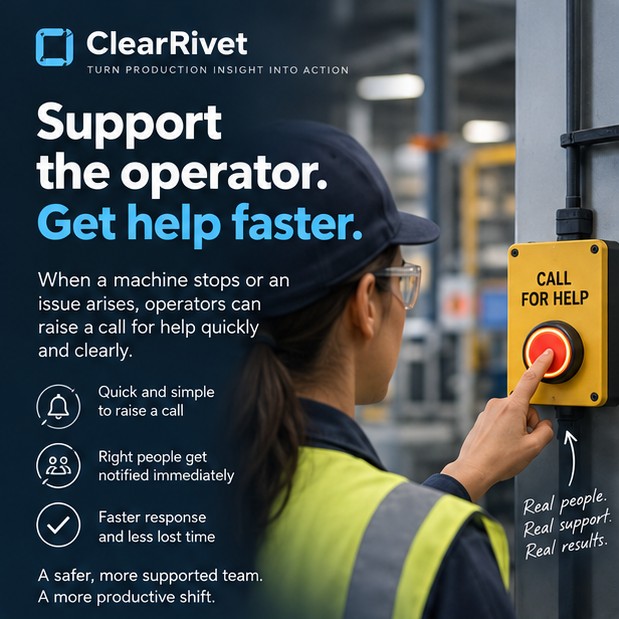
OPERATOR
Call for help
Raise maintenance, quality or material support without leaving the machine.

DIGITAL ANDON · CALL FOR HELP
An operator calls for help. Maintenance sees it. The request is acknowledged, worked and resolved—with the machine and timing still attached.
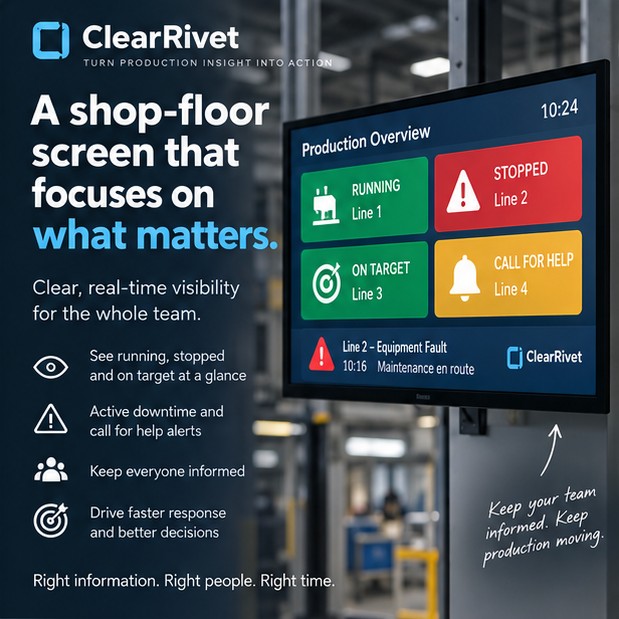
ONE REQUEST · THREE VIEWS
Instead of a radio call disappearing into the shift, the request stays visible and measurable.
Raise maintenance, quality or material support without leaving the machine.
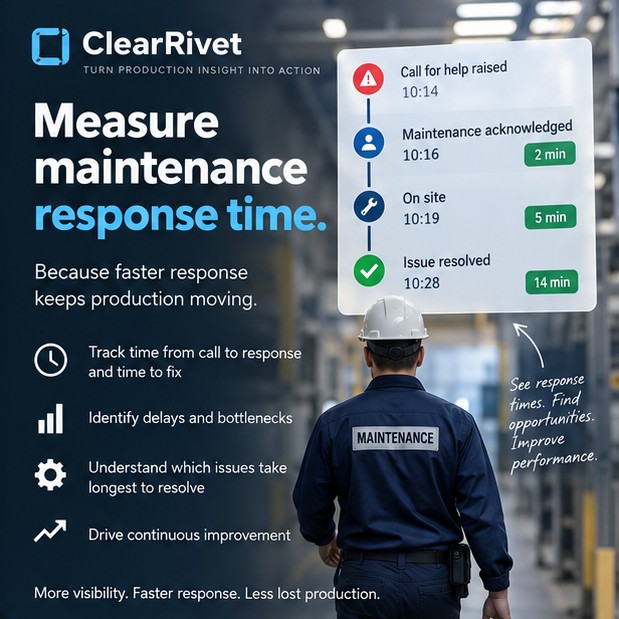
See the waiting request, context and elapsed time in one place.
Know what is waiting, who owns it and what is still unresolved.
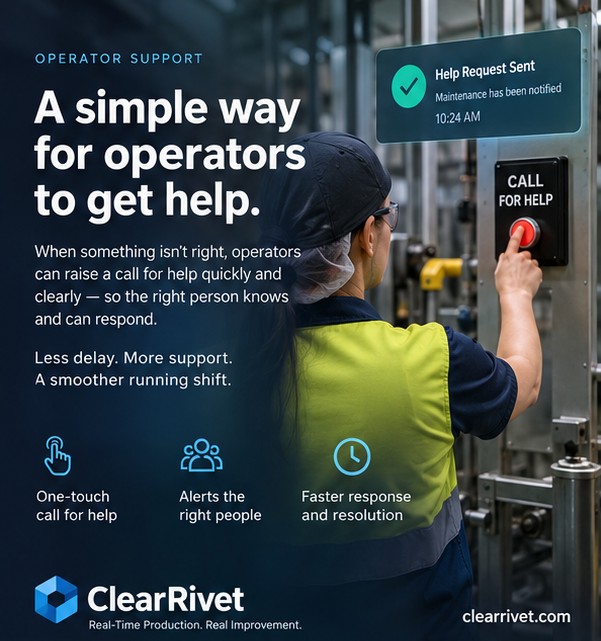
CLOSE THE LOOP
A request should not end when someone notices it. ClearRivet keeps acknowledgement, conversation and resolution together so response time can become an improvement measure.
FEATURES SHOWN
EXPLORE THE WORKFLOW
COMMON QUESTIONS
No. Traditional Andon can be physical lights or boards, but the same principle can be implemented digitally: make a problem visible, signal who needs to respond and track the state of the issue.
Yes. Plants may use it for maintenance, quality, material supply, team-lead support or other defined escalation paths.
Because total downtime alone cannot show whether production was waiting for support or whether the technical repair itself took the time. Separating the intervals creates a more useful improvement measure.
Know what needs attention.